Dirty Fuel?
- Are you changing your filters prior to 500 hours?
- Do you have excess exhaust smoke?
- Is your fuel stored for more than 90 days?
 If you answered YES, then it’s time to have your diesel fuel professionally cleaned. If you answered YES, then it’s time to have your diesel fuel professionally cleaned.
Can you afford to gamble with your engine’s reliability? Clean fuel is necessary for optimum engine performance. Giving your engine the best fuel possible will increase reliability and safety.
Would you like to reduce the overall operating costs of your diesel engine?
An engine that burns clean fuel will have fewer injector failures, less filter maintenance and smoke less. By reducing the overall maintenance and extending the engine’s life, you will reduce both short & long term expenses.
 Most people who operate and maintain Diesel engine systems are familiar with the black slimy material frequently seen in their fuel filter elements, and found in the bottoms of their fuel tanks. It is known by many names e.g. algae, mud, sludge, dirt, BS&W , and many other unsavory sounding terms - all of which are misnomers. Many people think this material is some sort of microbe, thus in the marine industry, it is most commonly called "algae". While bacteria and other microbes contribute to and accelerate this process, sludge is no more bacteria than milk that has turned into cottage cheese -- it's still milk, only in a physically different form. Diesel fuel forms wax and asphalt, not "algae". Most people who operate and maintain Diesel engine systems are familiar with the black slimy material frequently seen in their fuel filter elements, and found in the bottoms of their fuel tanks. It is known by many names e.g. algae, mud, sludge, dirt, BS&W , and many other unsavory sounding terms - all of which are misnomers. Many people think this material is some sort of microbe, thus in the marine industry, it is most commonly called "algae". While bacteria and other microbes contribute to and accelerate this process, sludge is no more bacteria than milk that has turned into cottage cheese -- it's still milk, only in a physically different form. Diesel fuel forms wax and asphalt, not "algae".

To understand the source and nature of this material, it is helpful to know a little about how Diesel Fuel and other distillate products are made in today's modern refineries. In the "old days" (15 - 25 years ago) processing of crude oil into the light distillate products we all know as gasoline, Kerosene, home heating oil, jet fuel, and diesel was basically done through heating the crude oil. At different boiling points, the various fractions of the crude were evaporated then condensed and sent to a storage tank for distribution. The distillate products, diesel fuel included, were fairly stable products with a shelf life measured in years.
The residual crude oil left over after the distillation process, approximately 50% of the barrel of crude that we start with, is the very heavy oils that are used for large ships and power plants, along with other industrial applications e.g. manufacture of products such as plastics, pharmaceuticals, nylon, asphalt, etc.
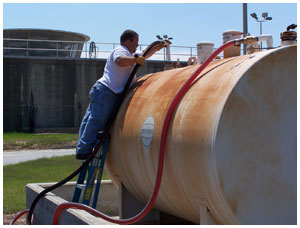 The refining process is dramatically different today. Demand for these light distillate products has increased rapidly, forcing the refiners to find new ways to extract more of them from the crude oil. Catalytic, or chemical cracking now allows the refiner to make more of the valuable lighter distillates from each barrel of crude, leaving only about 16% of the residual as heavy fuel oils. Environmental concerns have resulted in additional treatment of diesel, for example to lower sulphur content. This also contributes to instability of today's fuels. The refining process is dramatically different today. Demand for these light distillate products has increased rapidly, forcing the refiners to find new ways to extract more of them from the crude oil. Catalytic, or chemical cracking now allows the refiner to make more of the valuable lighter distillates from each barrel of crude, leaving only about 16% of the residual as heavy fuel oils. Environmental concerns have resulted in additional treatment of diesel, for example to lower sulphur content. This also contributes to instability of today's fuels.
Diesel fuel refined with these new methods is far less stable than that made with simple distillation. This results in more rapid deterioration in the form of solids precipitating to make sludge. Key fuel components such as paraffins and asphaltenes begin to oxidize and re-polymerize resulting in dark coloration, clogged filters and tank sludge that is commonly called "algae". In reality, this stuff is actually wax and asphalt !!
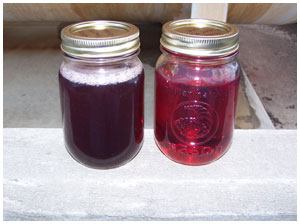
When this condition is present, the fuel does not combust rapidly causing a loss of engine efficiency. When the exhaust ports open, still smoldering fuel clusters become smoke & soot, leaving carbon buildup in the engine and exhaust trunk. Eventually, when it precipitates to the bottom of the tank, or is trapped in your filter, these key components cannot contribute to transferring the energy in the fuel to power the engine.
So the cause of the so called "algae" is simply the result of ageing fuel, which can occur in as little as 60-90 days, and depending on the cleanliness, and maintenance of the tanks in which it is kept, possibly even sooner.
Summary
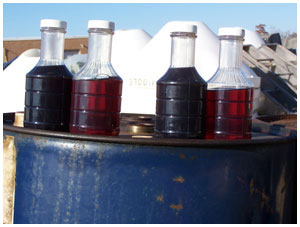 Today's Diesel Fuel is refined in a much different way than that of 15-20 years ago. Catalytic cracking produces a far greater volume of light & middle distillate products from each barrel of crude oil, however the stability of the fuels has been dramatically shortened. Today's Diesel Fuel is refined in a much different way than that of 15-20 years ago. Catalytic cracking produces a far greater volume of light & middle distillate products from each barrel of crude oil, however the stability of the fuels has been dramatically shortened.
Key fuel components such as paraffins and asphaltenes begin to form clusters that precipitate into the sludge commonly known as "algae". They comprise the bulk of this material that clogs filters, causes engines to smoke and perform poorly, and makes tank sludge.
CriticalFuel.com can stop and reverse this process by impacting these clusters of molecules with inductive energy. This breaks up the clusters that have formed resulting in better filterability and combustibility of the fuel, and preventing the formation of tank sludge by the return line, which delivers clean treated fuel back to the tanks.
| 
